

I'm taking part in the Royal Parks Half Marathon 2026 as part of #TeamStroke
I joined #TeamStroke for the Royal Parks Half Marathon 2026.
## My Story
Most of you know that an MRI a couple of years ago revealed I’d previously had a stroke. Since then, doctors found two underlying risk factors: a hole in my heart (a PFO) and antiphospholipid syndrome. Thankfully, both are now managed with Warfarin, under the watchful eye of my amazing anti-coagulation team.
Physically, I am incredibly lucky. While I deal with some brain fog and short-term memory issues, the mental toll has been the hardest part. Being told at 38 that you’ve had a stroke—and that a second one could be fatal or life-altering—is a tough pill to swallow. For two years, I’ve vacillated between being ultra-healthy and adopting a "you only live once, eat the cake" mentality.
Finding Balance Through Running
Running is the one thing that keeps me grounded. I’m not fast, and I won’t be winning any medals, but spending a couple of hours plugged into an audiobook brings my brain and body into perfect homeostasis. It makes me feel like I’m winning at life.
Why I'm Running for the Stroke Association
I believe I actually had my stroke at age 16. I collapsed while making dinner, my face dropped, and my speech slurred. Yet at A&E, we were told it was likely "just a migraine" due to my age, and we were sent home.
Fast forward to the accidental discovery of my brain damage years later, and the contrast is stark. Now, specialists treat me with kid gloves, and the stroke team didn't stop investigating until they found answers.
Excellent, thorough stroke care shouldn't depend on luck, your age, or which hospital you happen to walk into.
The Reality of Stroke in the UK
* **100,000** strokes happen in the UK every year—that's one every five minutes.
* There are over **1.4 million** stroke survivors currently rebuilding their lives.
The Stroke Association believes everyone deserves the best possible care and support to rebuild their lives. They rely entirely on donations to fund vital services, campaign for better care, and research preventative treatments.
If you are able to donate, your support will help ensure that future stroke survivors get the immediate, life-saving answers they deserve. Thank you so much!
My Achievements

Fundraising page set up

Added a profile pic

Made a donation

Shared your page

Reached 50% of target

Reached fundraising target
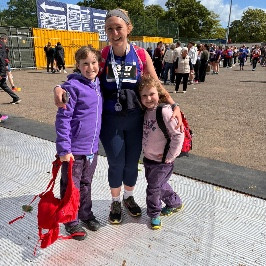
Week 3 Training Blog: Lumps, Bumps, and Diets
Friday 19th JunThe mileage and intensity are ramping up, and with the warmer weather, it’s been tiring. While I’m not overwhelmed, I am facing a few literal and metaphorical speed bumps this week.
The Shoe Dilemma & Dodgy Knees
I switched to Asics for this training cycle, but even at just 5K, they are causing severe rubbing on the arches of both feet. Because I have wide feet, blister plasters are a temporary fix, but the real issue is that the discomfort is changing my running form. This is causing new aches and pains in my legs.
Fixing my form is crucial because I’m managing two old knee injuries:
Left Knee: Residual soreness from past bursitis (I use K-tape for every run).
Right Knee: A permanent "squidgy lump" from an old scooter accident that previously triggered bad sciatica.
I’m relying on strength training to protect my joints because the long-term dream is to run a full marathon.
The Diet Puzzle: Running on Warfarin
To ease the load on my joints, I want to lose about a stone (14 lbs) during this training. However, managing my diet is a bit complicated due to my medication. I am on Warfarin for an autoimmune condition called Antiphospholipid Syndrome, which causes my blood to clot easily.
The Alcohol Win: Warfarin requires limiting alcohol to 14 units a week. Sticking to designated drinking days has drastically improved my sleep, mental well-being, and morning mood.
The Green Veggie Problem: Normally, I’d lose weight by filling half my plate with green vegetables. However, greens are high in Vitamin K, which counteracts Warfarin. Because my blood levels are finally stable, I cannot make any drastic changes to my vegetable intake. No crash dieting allowed!
The Weight Loss Plan
Running makes you hungry, and a 5K only burns about 350 calories—making it incredibly easy to accidentally overeat. To lose a steady 1 lb a week, I need a daily 500-calorie deficit.
Since I can't drastically alter my core meals without affecting my medication, my strategy is straightforward:
Keep my main meals consistent.
Cut out the cakes, biscuits, and chocolate.
Drink plenty of water.
Lightening the load pound by pound will make a massive difference for my knees by race day.
Thank you for following my journey! If you’d like to support my training and keep these knees moving, please consider sponsoring me at the link below.
Share
From 'Sticky Blood' to the Runner’s High: Why I’m Taking Back Control, One 5:20 AM Alarm at a Time
Friday 12th JunThank you to my sponsors

£28.44
Rachael Sturgess
£25
Thomas Mcgregor
A fantastic cause, good luck.
£22.80
Cathryn Mortimer
Very impressive Vic - good luck! X
£17.10
Maria Coombs
You’ve got this, proud of you already. Xxxx
£13.94
Victoria Cooper
£11.55
Emma
You are amazing and so brave
£11.55
Neil Coleman
Good luck!!
£11.55


Keep going vic